Why smoke odor lingers after a fire and how deodorization actually works
Smoke smell is not on the surface. It is in the house, and getting it out starts with finding where it went.
October 1, 2026 · 4 min read
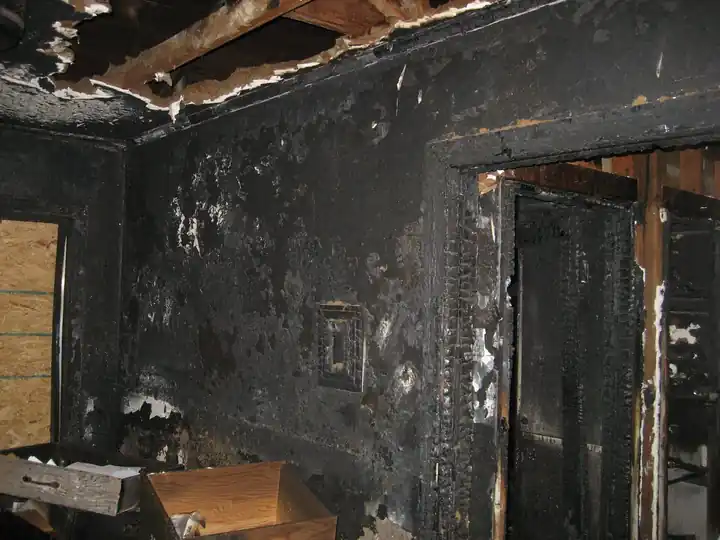
People are often surprised by how much the smell outlasts the fire. The flames are out, the soot is wiped off the counters, and a month later the house still smells like a campfire every time the air conditioner kicks on. If you have ever burned something in the microwave, you know how hard it is to get that odor out of one small box. Now think about a whole house. This article explains why smoke odor lingers and what real deodorization looks like.
Why the smell sticks around
Smoke is not a gas that drifts out and disappears. It is a mix of gases and extremely small particles, and those particles travel everywhere air goes. They settle on surfaces, and they are carried into porous materials: drywall, insulation, wood framing, carpet and padding, upholstery, curtains, clothing. Heat from the fire opens up those materials, and humidity from the water used to put the fire out can help the odor settle in.
Surfco's fire damage process makes the same point about where smoke goes. Smoke and soot can affect your air ducts and small crevices in your home, which is why Surfco says it is so thorough during the inspection. Once the HVAC system has run, the ductwork is a second delivery route. You can scrub a room clean and still have the smell blown back into it.
Why masking sprays fail
A scented spray, a candle or a bowl of vinegar changes what you smell for an afternoon. It does nothing to the particles that are causing the odor. When the scent fades, the smoke is still there, and it often smells worse, because now it is mixed with a fragrance. Surfco's description of its own work is the opposite approach: they say they do not cover up smoke odor but locate all the causes of the odor and neutralize them completely.
The order that makes odor removal work
Surfco's residential fire restoration process has five steps, and deodorization is the last of them for a reason. Everything before it removes what the odor is attached to.
- Inspect and assess the fire damage. The technician inspects and tests all areas, takes soot samples and photos for your insurance, and checks ducts and small crevices.
- Board up open areas. Walls, windows and roofing damaged by the fire are secured and tarped so the property is safe from the elements.
- Water damage restoration. The fire department's water causes its own damage, so water is removed and dehumidifiers and air movers dry what is left.
- Cleaning and sanitizing. Professional cleaning solutions and fire damage restoration equipment remove smoke and soot, and air filtration devices with special charcoal filters clean the air.
- Deodorization. The remaining odor is located and neutralized.
Step four can take a while. Surfco says cleaning and sanitizing could take several days to a week or two, depending on the severity of the fire. That is not padding. Soot has to be physically removed from surfaces, and contents have to be cleaned back toward their pre-loss condition before the last of the smell can be addressed.
How deodorization works in principle
There are different ways to neutralize odor, and a good contractor will explain which they intend to use. In general terms, the trade uses a combination of these ideas:
- Remove the source. Charred materials that cannot be cleaned are cut out and discarded, because no treatment will fully remove odor from something that is still burned.
- Clean the surfaces thoroughly so there is no soot film left to give off odor.
- Filter the air. Air filtration devices with charcoal filters capture odor molecules and fine particles as air passes through them.
- Neutralize what remains. Treatments that react with odor molecules, rather than covering them, are applied to surfaces and to the air in the structure.
- Treat the ducts and the HVAC system, so the house is not re-contaminated every time the system runs.
The specific equipment varies from job to job and contractor to contractor. Surfco's own wording is that its team uses a careful strategy and thorough effort to find every cause of the odor and neutralize it. If you are comparing bids, ask what the plan is for the ducts, the insulation and the contents, not only the visible rooms.
What about your belongings
Clothes, furniture, bedding and keepsakes hold smoke too. Surfco lists content cleaning, content storage and fabric restoration among its services. A pack-out, where belongings are carefully wrapped, boxed, stored in a warehouse and returned, lets the house be cleaned and deodorized without a houseful of smoky contents putting the smell back.
Practical things you can do now
- Do not run the HVAC system until the technician has inspected the ducts.
- Do not wipe soot with a dry cloth, which can smear it into the surface.
- Keep a record of everything that was in the house, with photos if possible.
- Ask your insurance company about coverage for cleaning, deodorization and temporary housing.
- Keep clothing and soft goods that can be laundered separate from those that need professional cleaning.
Surfco works with your insurance company to minimize hassles, and its fire damage service includes around-the-clock emergency response, soot removal, smoke damage cleanup and smoke odor neutralization. The sooner the soot is removed and the odor is addressed, the less time it has to set in.
If a fire has left a smell you cannot get rid of, call Surfco at 479-287-6205. The team answers around the clock and serves homes and businesses across Northwest Arkansas from the Springdale and Bentonville offices.
Surfco Restoration & Construction, 479-287-6205
Call 479-287-6205More articles
What to do in the first hour after water damage
The first hour will not repair your house, but it decides how much repair there is to do.
Asbestos in older Northwest Arkansas buildings: what to know before you renovate
If the building is older, the inspection comes before the sledgehammer.