What to do in the first hour after water damage
The first hour will not repair your house, but it decides how much repair there is to do.
October 1, 2026 · 4 min read
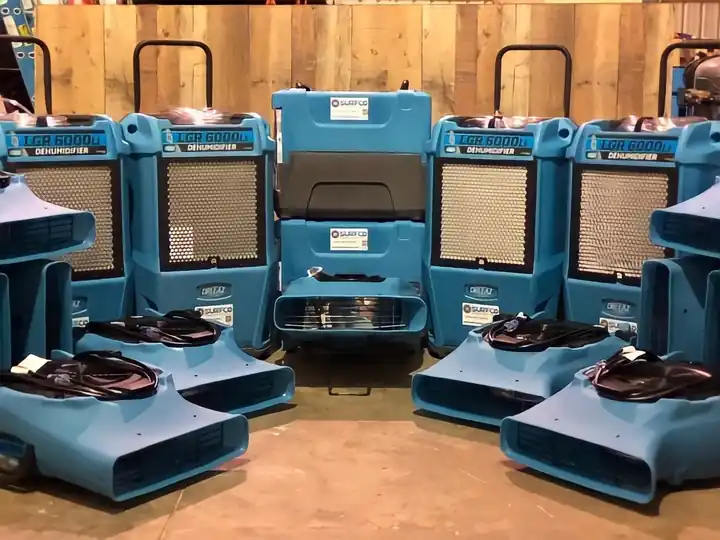
A supply line lets go behind the toilet. A water heater fails in the garage. A dishwasher hose splits while everyone is at work. Water damage almost never arrives at a convenient time, and the first hour after you find it matters more than most people expect. What you do in that hour will not fix the house, but it can keep a bad day from becoming a much bigger repair. This guide covers the steps a homeowner or property manager can reasonably take, the ones to leave alone, and what happens when a Surfco technician arrives.
Stop the source, then think about safety
Find where the water is coming from and stop it if you can do so safely. For a supply line or an appliance, that usually means the shutoff valve under the sink or behind the toilet, or the main shutoff for the whole house. If the water is coming through a ceiling, from a roof, or from a neighboring unit, you may not be able to stop it yourself. In that case skip ahead and make the call.
Before you step into a wet room, think about electricity. Water and outlets, ceiling fixtures or extension cords are a poor mix. If water is pooling around outlets or dripping through a light fixture, do not stand in it. Turn off power to that area at the breaker panel only if the panel is dry and you can reach it without crossing standing water. If you cannot, stay out of the room and tell the responder when you call. Water that came from a sewage backup or from outside flooding is a different category of problem from a clean supply line leak, and it should not be cleaned up by hand.
Call early, and call a number that answers
Call Surfco at 479-287-6205. Emergency response is available 24/7, even on holidays, so a pipe that fails at two in the morning on a Sunday gets the same attention as one that fails on a Tuesday afternoon. When you call, say what the source was, roughly how long the water ran, which rooms are wet, and whether any ceiling is sagging.
What you can do while you wait
Useful things to do:
- Take photos and a short video of the water, the affected rooms and any damaged belongings before you move anything. Your insurance company will want to see what the room looked like.
- Lift small, valuable and easily damaged items out of the wet area: electronics, paper files, photographs, books, rugs.
- Put foil or plastic blocks under furniture legs that sit on wet carpet, so wood finish and stain do not bleed into the floor.
- Soak up standing water you can safely reach with towels or a mop. Do not use a household vacuum on water.
What to leave alone
It is tempting to start pulling up carpet or cutting out wet drywall right away. Leave that to the crew. Materials that are removed without being photographed first make the conversation with your insurer harder, and drywall can hide wiring or pipes that need to be looked at before anyone cuts.
Also, do not trust your eyes. A floor that looks and feels dry can still be holding water underneath, and a wall can be wet inside while the paint looks fine. Water travels along framing, under baseboards and down through flooring. That is why a proper inspection starts with meters, not with a guess.
What the first Surfco visit looks like
According to Surfco's water damage process, the first visit is an inspection. The inspector evaluates the damage, takes moisture readings, and gives you an estimate for the damage, including whether they believe your insurance will cover it.
When the crew comes back to start the work, the steps are straightforward:
- Remove carpet, padding, flooring and drywall as necessary
- Extract water from the exposed areas
- Set the drying equipment
- Take moisture readings each day
- Take relative humidity readings each day
The daily readings are the part owners tend to appreciate most. Drying is measured rather than assumed, so the equipment stays until the numbers say the structure is dry, not until someone feels it is probably done.
Be ready for the equipment. Surfco notes that drying machines run hot and hum loudly, so stay out of that room as much as you can, and expect a small bump in your electric bill while they run.
Insurance, in plain terms
Surfco advertises Direct Insurance Billing, and one customer review on their site says the team made coordinating with insurance an easy process. Policies differ from one household to the next, so read yours or ask your agent what it covers. Surfco's own guidance is worth knowing: a long-term leak, especially one with mold growing, is generally not covered unless you carry extra coverage. If you see unusual water or a stain that was not there last month, that is the moment to call, not after it has been growing for a season.
One company for the whole job
Once the structure is dry, there are floors to replace, drywall to patch and walls to paint. Surfco is a licensed Arkansas commercial contractor, so the company that extracted the water can also handle flooring, carpet, drywall repair and paint. Anything outside its scope, it says it will coordinate with trusted contractors in Northwest Arkansas.
If water is on the floor right now, stop reading and call 479-287-6205. The Surfco team covers homes and businesses from the Springdale and Bentonville offices, and the phone is answered around the clock.
Surfco Restoration & Construction, 479-287-6205
Call 479-287-6205More articles
Asbestos in older Northwest Arkansas buildings: what to know before you renovate
If the building is older, the inspection comes before the sledgehammer.
After a tornado or storm: board up, moisture testing and starting the insurance claim
The order matters: make it safe, make it secure, find the water, then build the claim.