After a tornado or storm: board up, moisture testing and starting the insurance claim
The order matters: make it safe, make it secure, find the water, then build the claim.
October 1, 2026 · 4 min read
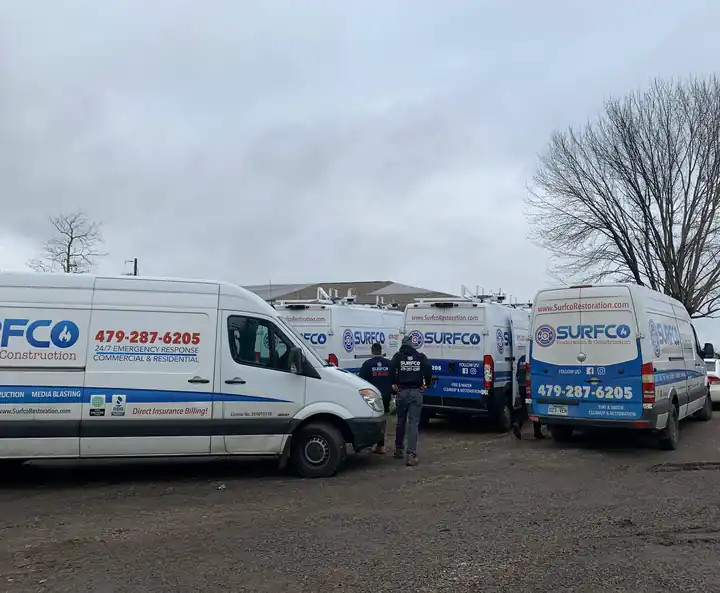
Northwest Arkansas storms do not keep office hours. A tornado warning, a wind event or a hailstorm can leave a house with open walls, missing roofing and soaked insulation by the time the sky clears, and it is usually the middle of the night. The hours after a storm feel chaotic, but the right order of operations is simple: make sure everyone is safe, secure the building, find out where the water went, and start the claim with good documentation. Here is how each stage works, and where a restoration contractor fits.
Safety first, before anything else
Do not enter a structure that looks unstable. Stay away from downed power lines, and assume any line on the ground is live. Be careful of broken glass, exposed nails and debris, and wear sturdy shoes and gloves if you must walk through a damaged area. If there is a smell of gas, leave and call the utility from outside. Possessions can wait. People cannot be replaced.
Secure the building: board up and tarping
Once it is safe, the next job is to close the building back up. A home with a broken window, a torn-off section of wall or a damaged roof is exposed to rain, wind and anyone who wanders by. Every hour it stays open, more water gets in, and more materials get wet.
That is what emergency board up and tarping is for. Surfco offers it for residential and commercial properties, and says it will come as quickly as possible, no matter the time of day or night, to secure the property from unwanted guests and the elements until permanent repairs can be made. Windows and walls that are gone get boarded, and damaged roofs get tarped. For roofs specifically, Surfco also lists 24/7 emergency roof repairs in Northwest Arkansas.
A temporary closure is not a repair, and it is not meant to be. It is meant to stop the damage from growing while you sort out the claim and schedule the real work.
Moisture testing: finding the water you cannot see
Storm water rarely stays where you can see it. Wind-driven rain gets behind siding, under shingles and into wall cavities. Insulation soaks it up. Flooring and drywall can look fine on the surface and be wet below.
Moisture testing uses meters to measure how wet a material actually is, so the crew knows what can be dried in place and what has to come out. One Google reviewer described exactly this sequence after a tornado, writing that they called in Surfco to do some preliminary moisture testing on their home, and that Surfco then did moisture mitigation work and ripped out all of the wet materials. The reviewer added that the team was extremely timely, highly professional and informative.
Another customer, Rebecca M., wrote on Surfco's site that the team worked quickly on the water mitigation issues in her house following tornado damage. In both cases the order was the same: test first, then dry or remove, then repair.
Start the claim with good records
Your insurance company will ask what happened and what was damaged, and your best answer is a set of clear records made as early as possible. Policies differ, so call your agent or the claims line to ask what your particular policy requires. Some steps are sensible whatever the policy says:
- Photograph and video the damage from the outside and inside before anything is moved, covered or thrown away.
- Keep damaged materials or photos of them until the adjuster has seen them, if it is safe to do so.
- Keep receipts for emergency measures such as board up, tarping and temporary housing.
- Write down dates and times: when the storm hit, when you found each problem, when you called whom.
- Make a list of damaged belongings with approximate values and ages.
Surfco advertises Direct Insurance Billing and says it works with your insurance company to restore your home and belongings after a natural disaster. On storm jobs, the practical benefit is having the people who did the moisture readings and the demolition available to explain their findings in the same terms the adjuster is using.
One company from tarp to paint
A storm loss is rarely only water or only roofing. Surfco's own list of what it handles after a natural disaster includes water and mold damage, fire damage, wind, hail and roof damage, fabric restoration, board up and tarping, repairs such as painting and drywall, and content storage and cleaning. The exterior and the interior are handled by the same company, from decks and patios to drywall repair, which means fewer phone calls and fewer separate bills during a stressful stretch. If something falls outside their scope, they say they will help you coordinate with another trusted contractor in the area.
A word about mold. When materials stay wet, mold can follow, and it is much easier to prevent than to remove. That is one more reason the moisture readings and drying come early in the order of work, not late.
A simple checklist for the first day
- Get everyone out of unsafe areas and account for family, tenants or staff.
- Call your insurance company to open the claim and ask what they require.
- Call Surfco at 479-287-6205 for board up, tarping and moisture testing.
- Photograph everything before the crew starts.
- Keep every receipt and every name you are given.
If a storm has hit your home or building, call Surfco at 479-287-6205. The line is answered 24/7, even on holidays, and the crews work out of Springdale and Bentonville across Northwest Arkansas.
Surfco Restoration & Construction, 479-287-6205
Call 479-287-6205More articles
What to do in the first hour after water damage
The first hour will not repair your house, but it decides how much repair there is to do.
Asbestos in older Northwest Arkansas buildings: what to know before you renovate
If the building is older, the inspection comes before the sledgehammer.